

Kitchen Design Mistakes Dubai Homeowners Make, And How European Brands Solve Them

Why Dubai’s Luxury Kitchens Fail, And How European Precision Fixes Them
Is your kitchen designed to impress for a year, or perform for a decade?
In Dubai’s high-end residential market, kitchens are no longer secondary spaces. They are architectural anchors.
Yet even within the world of Luxury Interior Design Dubai, certain design mistakes continue to surface in elite homes.
These errors are rarely about the budget. They are about planning, integration, and long-term thinking.
The good news?
Most of these mistakes are preventable, especially when European modular kitchen brands enter the conversation early.
Let’s examine where Dubai homeowners often go wrong, and how precision-engineered European systems solve those problems decisively.
Mistake 1: Designing for Aesthetics, Not Architecture
Many kitchens are designed as decorative installations rather than architectural systems. Ornate shutters, feature islands, and dramatic lighting may look impressive during handover.
But when cabinetry proportions do not align with ceiling heights or wall planes, the result feels disconnected.
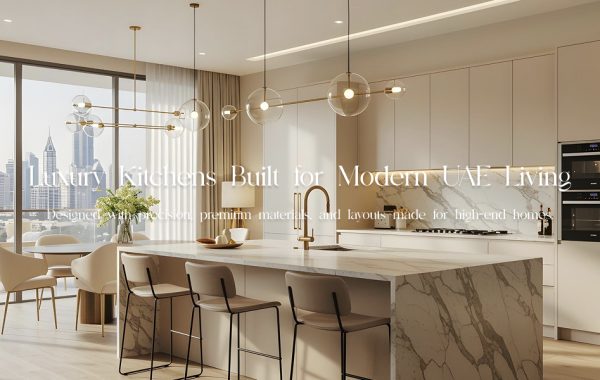
In modern Dubai villas, especially in areas like Palm Jumeirah, Emirates Hills, and Dubai Hills Estate, open-plan layouts dominate.
Kitchens are visible from living and dining zones. A poorly integrated kitchen disrupts spatial harmony.
How European Brands Solve This
European modular kitchens are designed as structured systems. Cabinet heights align precisely with ceilings.
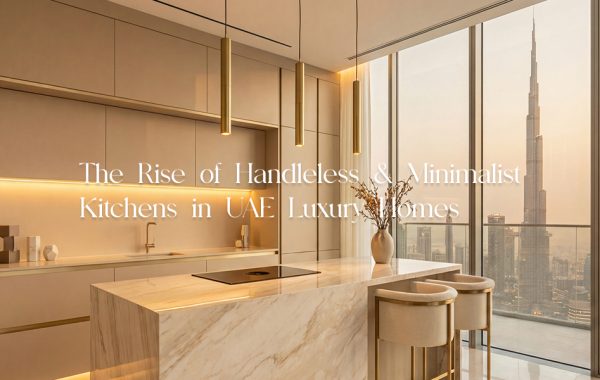
Handleless profiles create continuous horizontal lines. Appliances integrate seamlessly behind panels.
The kitchen becomes an extension of the architecture, not an interruption.
Precision alignment eliminates awkward gaps, uneven top panels, and inconsistent proportions.
In luxury homes, these small visual inconsistencies are magnified. European brands eliminate them through factory-engineered uniformity.
Mistake 2: Ignoring Climate Performance
Dubai’s climate is demanding. Heat, humidity fluctuations, and heavy daily usage put pressure on materials.
Traditional kitchens built with untreated wood or lower-grade boards often show signs of expansion, warping, or misalignment within a few years.
Many homeowners focus heavily on surface finishes without evaluating core material quality.
How European Brands Solve This
Leading European kitchen manufacturers use moisture-resistant boards, engineered cores, and high-pressure laminates built for durability.
Hardware systems are tested for repeated cycles. Hinges and runners maintain structural alignment over time.
This level of performance engineering ensures long-term stability, especially critical in waterfront properties and high-humidity zones.
For elite homeowners, longevity equals value retention.
Mistake 3: Poor Storage Planning
A visually stunning kitchen loses impact quickly if it cannot handle daily function. One of the most common mistakes in Dubai homes is inadequate storage planning.
Stacked cabinets with limited accessibility, poorly designed corner units, and insufficient pantry organization create daily frustration.
Luxury does not mean cluttered countertops.
How European Brands Solve This
European modular systems are built around intelligent storage architecture.
Deep drawers replace multiple smaller cabinets, allowing better organization. Pull-out pantry systems maximize vertical space.
Internal dividers create structured zones for utensils and cookware. Corner solutions eliminate dead spaces.
The difference lies in foresight. Storage is engineered into the design, not retrofitted after installation.
A minimalist appearance does not mean limited functionality. It means hidden efficiency.
Mistake 4: Overlooking Appliance Integration
In elite Dubai homes, premium appliances are standard. Yet many kitchens are designed without fully integrating them.
Exposed refrigerator sides, misaligned ovens, visible ventilation ducts, these details break visual continuity.
When appliances appear inserted rather than integrated, the space feels compromised.
How European Brands Solve This
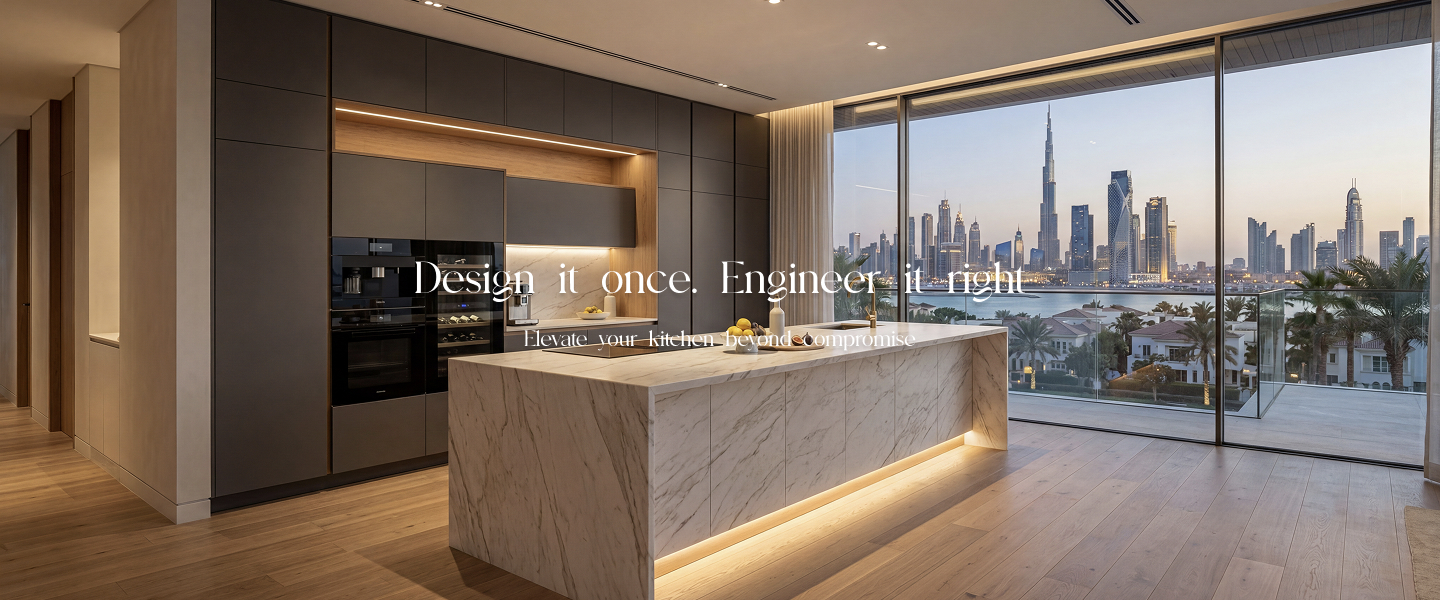
European kitchens are designed around appliances from inception. Built-in refrigeration columns sit flush within cabinetry.
Induction cooktops with integrated extraction eliminate bulky hoods. Panel-ready dishwashers disappear behind matching surfaces.
Electrical planning, ventilation allowances, and structural supports are considered early. This results in seamless integration.
Technology enhances the experience without dominating the aesthetic.
Mistake 5: Choosing Trends Over Timelessness
Dubai homeowners often gravitate toward bold finishes or high-gloss surfaces that feel current. While visually impactful initially, these choices can date quickly.
Luxury properties benefit from longevity in design language.
How European Brands Solve This
European kitchen design emphasizes clean geometry, proportion, and neutral palettes. Matte lacquers, textured laminates, natural wood veneers, and engineered stone create understated elegance.
Handleless systems, flush cabinetry, and concealed lighting establish timeless clarity. These elements age gracefully and adapt to evolving décor preferences.
The focus shifts from decorative trends to structural sophistication.
Mistake 6: Underestimating Lighting Strategy
Lighting is frequently treated as an afterthought. Oversized pendant fixtures may dominate the island, while task lighting remains insufficient. Poor lighting compromises both usability and atmosphere.
In open-plan villas, lighting must balance functionality and mood.
How European Brands Solve This
Integrated LED lighting systems are embedded within cabinetry. Under-cabinet strips illuminate worktops without glare.
Internal drawer lighting enhances usability. Shadow gaps create subtle architectural glow.
Layered lighting ensures the kitchen transitions seamlessly from task-driven activity during the day to ambient elegance in the evening.
Precision in lighting supports precision in design.
Mistake 7: On-Site Fabrication Without Quality Control
Traditional kitchens often rely on extended on-site carpentry. While craftsmanship can be impressive, variability in installation conditions affects alignment, finish consistency, and durability.
In high-value residences, unpredictability carries risk.
How European Brands Solve This
Factory-controlled manufacturing ensures precision before components reach the site. CNC cutting, calibrated assembly, and standardized tolerances minimize human error.
Installation becomes assembly rather than fabrication.
This controlled process reduces project timelines and enhances consistency — essential for elite clients who expect excellence without compromise.
Mistake 8: Ignoring Cohesion Across the Home
Kitchens should not feel isolated from surrounding interiors. Yet many Dubai homes feature stylistic inconsistencies between kitchen, living areas, and dressing rooms.
A fragmented aesthetic diminishes overall perception of luxury.
How European Brands Solve This
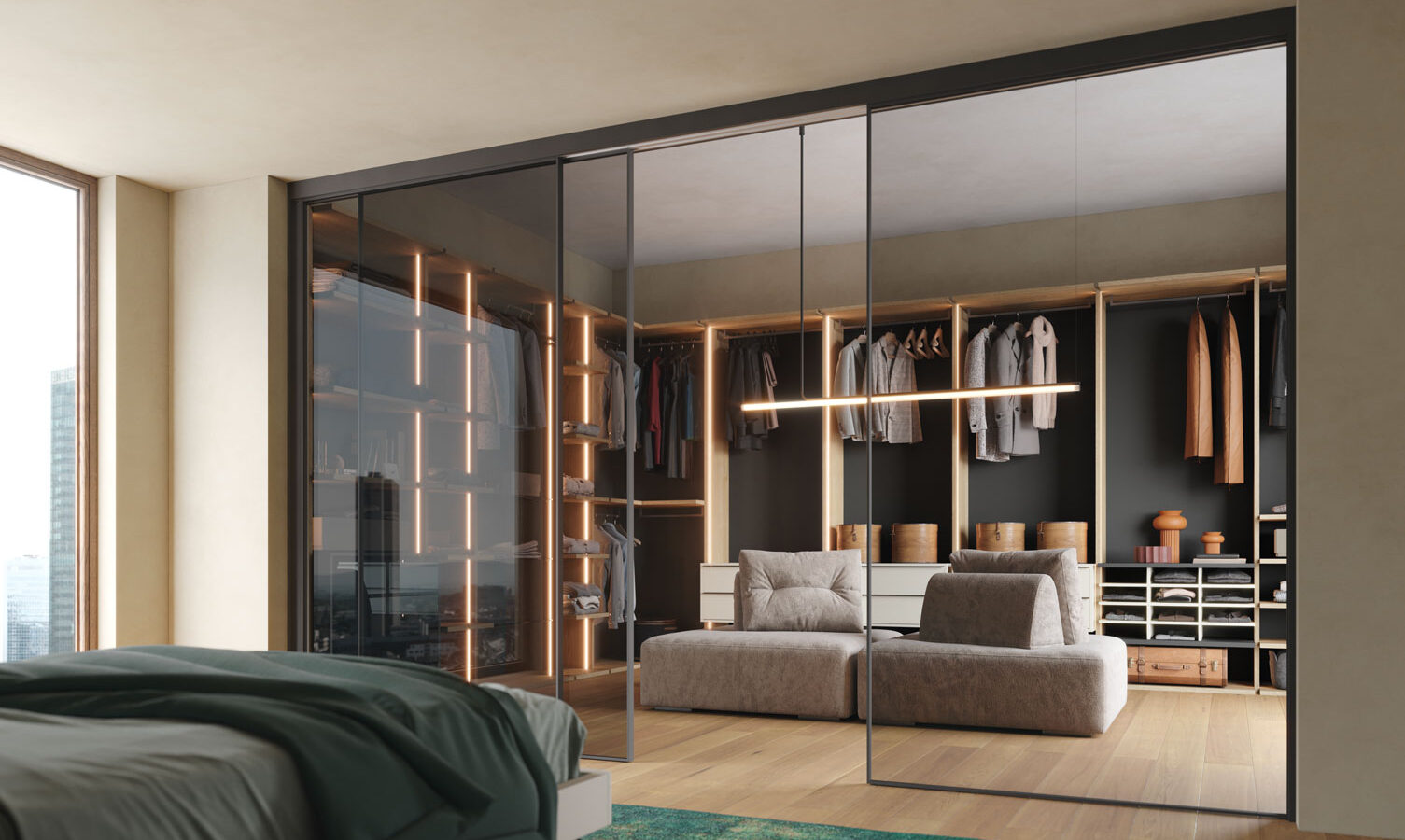
European modular systems allow design continuity across spaces. Cabinet finishes, handleless profiles, and material palettes can extend into adjacent zones, including media units, bar areas, and wardrobes.
Cohesion strengthens architectural identity.
In premium residences, design discipline matters as much as material quality.
Mistake 9: Misjudging Space Planning in Open Layouts
Oversized islands or poorly positioned cabinetry can obstruct circulation. In expansive Dubai villas, proportion is critical.
Without careful planning, large kitchens can feel cluttered despite their size.
How European Brands Solve This
European kitchen planning emphasizes spatial flow. Clearances are calculated precisely. Island dimensions consider traffic patterns.
Work triangles are optimized for efficiency.
The result is intuitive movement.
Luxury is not about scale alone. It is about balance.
Mistake 10: Viewing the Kitchen as an Expense, Not an Asset
Perhaps the most significant mistake is approaching kitchen design as a cost center rather than a long-term investment.
In Dubai’s elite property market, kitchen quality influences resale value. Buyers scrutinize materials, brand credibility, and installation precision.
How European Brands Solve This
Established European brands carry global reputations for engineering and durability. Their systems enhance property positioning and market perception.
A precision-built kitchen contributes to asset appreciation. It reflects disciplined design decisions, something elite buyers recognize immediately.
Why Dubai’s Elite Homeowners Are Shifting Toward European Systems
Dubai’s luxury segment is globally connected. Homeowners travel frequently. They experience residences in Milan, London, and Munich. Exposure elevates expectation.
The shift toward European modular kitchens reflects this maturity. It signals preference for:
- Engineering over ornamentation
- Performance over decoration
- Integration over improvisation
- Longevity over trend
Minimalism is not emptiness. It is structural clarity.
In high-end neighborhoods across Dubai, this shift towards handleless & minimalist kitchens is accelerating. Developers increasingly specify European systems in premium projects. Architects incorporate handleless cabinetry early in planning stages.
The standard has evolved.