

The Rise of Handleless & Minimalist Kitchens in UAE Luxury Homes

Why Minimalist and Handleless Kitchens Are Dominating Dubai’s Luxury Homes
The Rise of Handleless & Minimalist Kitchens in UAE Luxury Homes
Dubai has always embraced bold architecture, but inside its most refined villas and penthouses, a quieter revolution is unfolding.
Speak with Luxury Kitchen Interior experts in Dubai and they will tell you the same thing: homeowners are moving away from ornate cabinetry and decorative excess toward clean lines, seamless finishes, and kitchens that feel architecturally integrated rather than visibly constructed.
This is not a passing style preference. It represents a structural shift in how luxury is defined across the UAE.
Luxury in the region once leaned heavily on visual grandeur. Carved doors, decorative moldings, polished hardware, layered finishes. These kitchens were designed to impress instantly.
But as Dubai matured into a global design capital, homeowner expectations evolved. International travel, exposure to European architecture, and a deeper understanding of contemporary design reshaped taste.
Today’s clients benchmark their homes against properties in Milan, London, and Berlin. That exposure has recalibrated standards.
Minimalism entered the conversation not as simplicity, but as refinement.
The Influence of Modern Dubai Architecture
Open-Plan Living Has Changed Everything
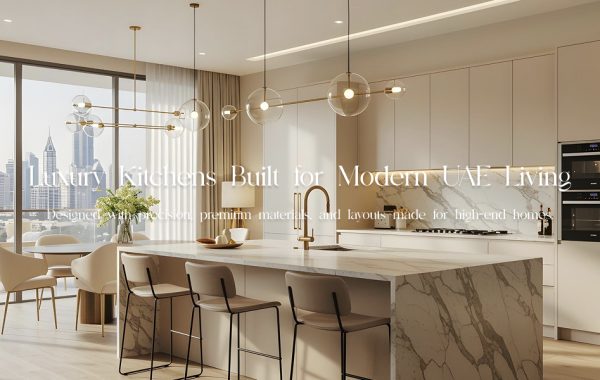
Modern luxury homes in Dubai are built around openness. Double-height ceilings, panoramic glass walls, and fluid transitions between kitchen, dining, and living areas are now standard in prime neighborhoods.
In such layouts, the kitchen is always visible. It is no longer a separate functional zone. It is part of the architectural composition.
A heavy, decorative kitchen interrupts that flow. A handleless, minimalist kitchen integrates seamlessly into it.
Clean lines allow the architecture to breathe.
Kitchens as Architectural Extensions
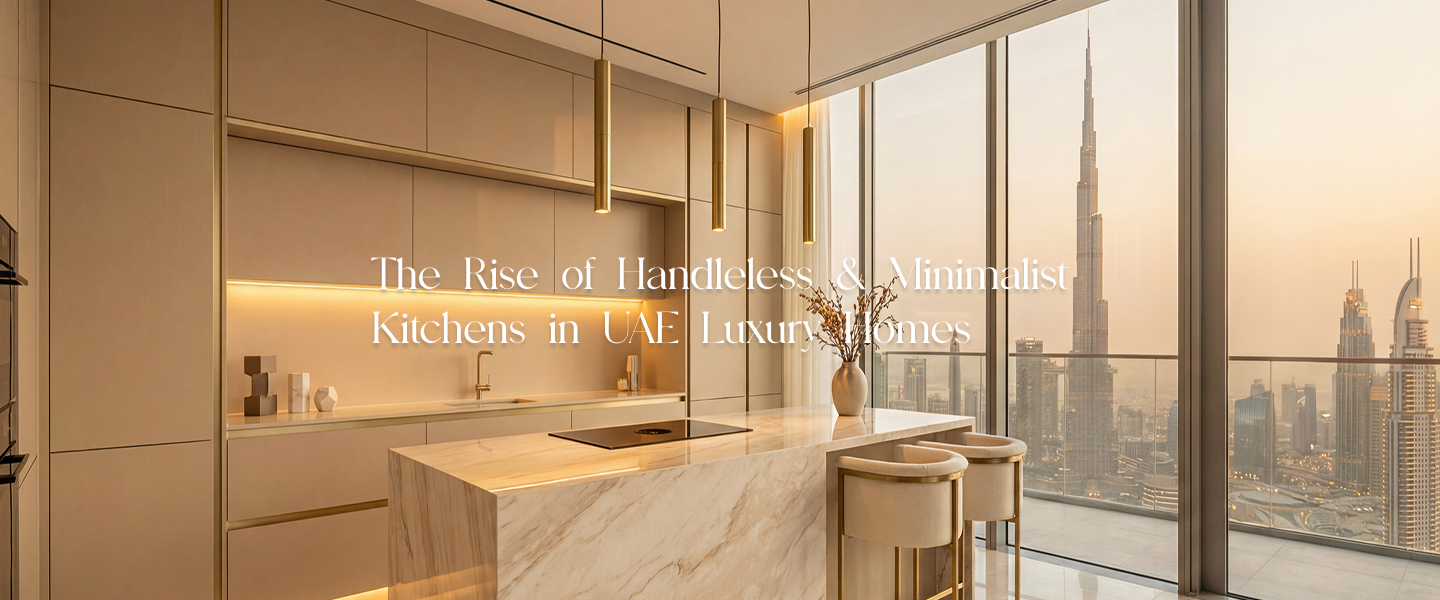
Handleless cabinetry transforms kitchens into structured wall systems rather than freestanding furniture pieces. Flush panels align with ceiling heights. Integrated appliances disappear behind matching surfaces. Countertops extend in uninterrupted planes.
The kitchen becomes architecture, not decoration.
Why UAE Homeowners Prefer Minimalist Kitchens
1. Visual Calm in a Fast-Paced City
Dubai is dynamic, ambitious, and high-energy. Homeowners increasingly view their residences as sanctuaries. Minimalist kitchens reduce visual noise. Clear countertops, concealed storage, and uninterrupted surfaces create psychological calm.
Environmental psychology consistently links organized environments with reduced stress levels. Clean geometry feels controlled. Control feels luxurious.
2. Precision Signals Sophistication
Minimalism leaves no room for imperfection. When design relies on straight lines and flat surfaces, every millimeter matters. Doors must align perfectly. Gaps must remain consistent. Drawer systems must glide silently.
That level of precision communicates craftsmanship. It reflects discipline rather than decoration.
3. Longevity Over Trend
Ornamental kitchens date quickly. Minimalist kitchens age more gracefully. Neutral palettes and structured lines adapt easily to evolving décor. This flexibility appeals to luxury homeowners who think long term.
The Rise of Handleless Systems
Engineering Behind the Aesthetic
Handleless kitchens are not simply about removing hardware. They rely on advanced engineering systems such as recessed gola profiles, rail channels, and push-to-open mechanisms.
These systems require:
- Precise alignment
- Structural integrity
- High-quality hardware
- Consistent manufacturing tolerances
The result is seamless functionality without visual interruption.
Why Flush Surfaces Matter
Traditional handles break visual continuity. Once removed, cabinetry reads as a single architectural volume. This uninterrupted flow enhances spatial perception, especially in open-plan villas.
Minimalism is not emptiness. It is alignment.
Spatial Continuity Beyond the Kitchen
The minimalist shift does not stop at cabinetry. Homeowners who choose handleless kitchens often extend the same philosophy throughout the home.
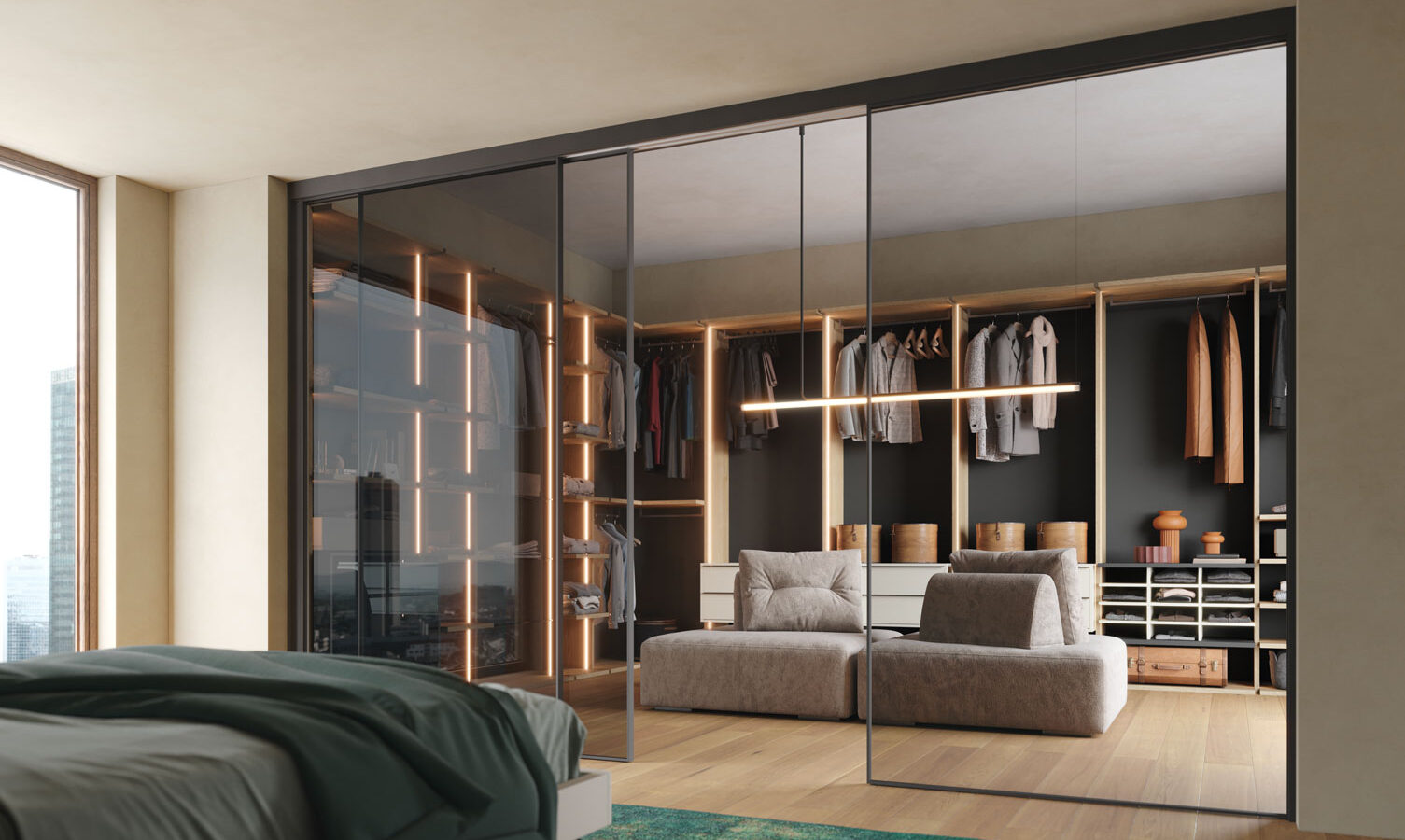
There is a growing demand for minimalist wardrobe designs that mirror kitchen aesthetics. Flush shutters, concealed handles, internal LED lighting, and intelligent storage layouts create cohesion between living spaces, bedrooms, and dressing areas.
Consistency elevates perception. When every room follows the same disciplined design language, the entire residence feels curated.
Material Trends in Dubai’s Luxury Kitchens
Ultra-Matte and Soft-Touch Finishes
Glossy lacquered surfaces are giving way to ultra-matte finishes that absorb light rather than reflect it. These surfaces create subtle elegance without glare.
Soft-touch laminates and textured veneers add depth without visual clutter.
Natural Stone & Thin Profiles
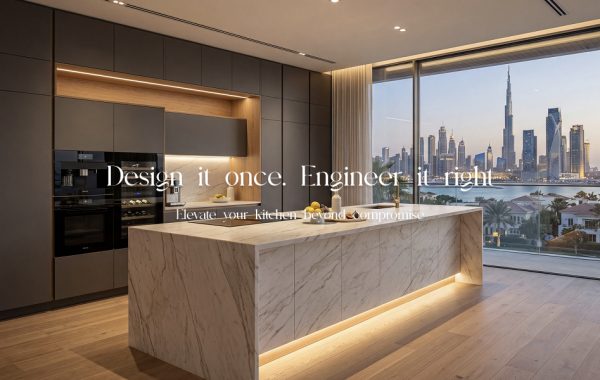
Waterfall-edge islands in engineered quartz or natural stone remain dominant. However, countertop profiles are becoming thinner and more refined. Slim silhouettes enhance the minimalist effect.
Warm Neutrals Over Stark Whites
While white kitchens remain relevant, many luxury homes in the UAE are embracing warm greys, taupe tones, muted oak, and charcoal finishes. These colors feel contemporary yet timeless.
Lighting as an Integrated Feature
Concealed Illumination
Instead of oversized decorative pendants dominating the ceiling, lighting is increasingly embedded within cabinetry.
Under-cabinet strips improve functionality. Integrated drawer lighting enhances usability. Shadow gaps create soft ambient glow.
Lighting becomes architectural rather than ornamental.
Balance Between Warmth and Precision
Layered lighting prevents minimalist kitchens from feeling sterile. Warm LED tones soften matte finishes and natural stone textures.
The objective is balance, not stark minimalism.
Technology Integration in UAE Luxury Homes
Modern homeowners expect smart appliances, but they do not want technological clutter.
Built-In Intelligence
Minimalist kitchens often incorporate:
- Concealed refrigeration columns
- Built-in steam and combi ovens
- Induction hobs with integrated extraction
- Hidden charging drawers
- Pop-up socket systems
Appliances are panelled to match cabinetry. Wires remain invisible. Surfaces stay uninterrupted.
Functionality is elevated without visual compromise.
Climate Durability & Material Performance
Dubai’s climate demands resilience. Heat, humidity shifts, and heavy usage require high-quality materials.
European-engineered handleless systems are often preferred due to moisture-resistant cores, precision hardware, and durable laminates.
Luxury homeowners increasingly evaluate kitchens as long-term investments. Structural reliability becomes as important as aesthetic refinement.
Developer Influence & Market Expectations
Premium real estate developments in areas such as Emirates Hills, Palm Jumeirah, Dubai Hills, and District One now regularly specify European modular kitchens as a selling feature.
This has elevated expectations. Buyers assume seamless cabinetry and integrated appliances as baseline standards.
Minimalism is no longer niche. It is mainstream within the luxury segment.
The Psychological Appeal of Order
There is something inherently satisfying about symmetry. When cabinet lines align uninterrupted from wall to wall, the mind registers balance. When drawers close softly and surfaces remain clear, the experience feels controlled.
Luxury is emotional. Minimalist kitchens evoke composure.
In high-performing households, that emotional clarity is powerful.
Sustainability and Conscious Luxury
Environmental awareness is gradually shaping buying decisions in the UAE. High-end clients increasingly inquire about material sourcing and sustainability certifications.
Many European kitchen manufacturers operate under strict environmental standards, using low-emission boards and recyclable components.
Minimalism naturally aligns with sustainability. Both emphasize thoughtful selection over excess.
Future Outlook: What Comes Next?
The trajectory suggests deeper integration.
- Even thinner countertop technologies
- Greater appliance invisibility
- Smart storage systems
- Advanced surface materials
- Seamless kitchen-to-living transitions
Design is becoming increasingly invisible. Precision is becoming more refined.
Minimalism will continue evolving, but its core philosophy—clarity, performance, and balance—will remain.
Precision as the New Definition of Luxury
The rise of handleless and minimalist kitchens in UAE luxury homes reflects a broader transformation in taste.
Dubai’s homeowners are no longer seeking decorative statements. They seek performance, cohesion, and architectural alignment. Clean lines signal confidence. Seamless integration signals intelligence. Structured minimalism signals maturity.
Luxury today is not about how much is added.
It is about what can be removed without losing function.
In Dubai’s most refined homes, the kitchen is no longer just a space for cooking. It is a carefully engineered environment that reflects global awareness, modern discipline, and quiet sophistication.
And that is why minimalist and handleless kitchens are not simply trending.
They are redefining luxury itself.
FAQ’s
1. What is a handleless kitchen?
A handleless kitchen is a kitchen design where cabinet doors and drawers open without visible external handles. Instead, they use recessed channels (gola profiles), rail systems, or push-to-open mechanisms.
This creates a smooth, uninterrupted surface across cabinetry, resulting in a clean and minimalist appearance. Handleless kitchens are popular in modern and luxury homes because they enhance visual continuity and architectural integration.
2. Are handleless kitchens practical for everyday use?
Yes, handleless kitchens are highly practical when engineered correctly. High-quality systems use durable rail profiles and precision hardware that allow smooth opening and closing.
Many designs also include soft-close technology for quiet operation. However, precision installation and quality materials are essential to ensure long-term performance, especially in high-use households.
3. Why are minimalist kitchens popular in Dubai luxury homes?
Minimalist kitchens are popular in Dubai because modern villas and apartments follow open-plan layouts. The kitchen is fully visible from living and dining areas, so homeowners prefer seamless cabinetry that blends into the architecture.
Minimalism also aligns with global design exposure, where clean lines, neutral tones, and integrated appliances reflect contemporary European influence.
4. Do handleless kitchens require more maintenance?
Not necessarily. In fact, they can be easier to maintain because there are no protruding handles that collect dust or grease. However, matte and high-touch surfaces may require regular wiping to prevent fingerprint marks.
Choosing fingerprint-resistant finishes and high-quality laminates reduces maintenance concerns.
5. Are minimalist kitchens more expensive than traditional kitchens?
Minimalist kitchens can be more expensive due to the engineering precision required for alignment, integrated systems, and concealed hardware. European modular systems, advanced materials, and installation accuracy contribute to the cost.
However, many homeowners view this as a long-term investment because durable construction and timeless design improve property value and longevity.
6. What materials are commonly used in luxury minimalist kitchens in the UAE?
Luxury minimalist kitchens in the UAE commonly use ultra-matte lacquers, textured laminates, natural wood veneers, engineered quartz, sintered stone, and high-pressure laminates. Moisture-resistant boards and precision hardware are also preferred due to the region’s climate conditions. These materials offer durability, heat resistance, and long-term structural stability.
7. Are minimalist kitchens suitable for large families?
Yes. Minimalist kitchens are highly functional when designed with smart storage systems. Deep drawers, pull-out pantry units, concealed compartments, and vertical storage solutions maximize space efficiency.
The minimalist look does not reduce storage capacity; instead, it emphasizes organized and hidden storage to maintain visual clarity while supporting daily family use.